
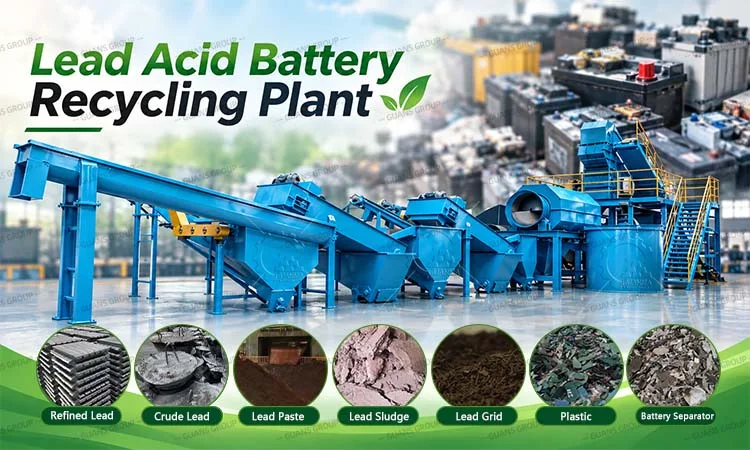
Lead Acid Battery Recycling Plant

Plant Type: fully automatic lead acid battery recycling plant
Feedstock: spent / used lead acid batteries
Battery Types: automotive, industrial, UPS, stationary batteries
Lead Recovery: 99%
Processing Capacity: 5-15ton/h (customized)
GUANS GROUP complete lead acid battery recycling plants for processing spent automotive, industrial, UPS and stationary batteries. From battery breaking to lead paste treatment, smelting, refining and ingot casting.

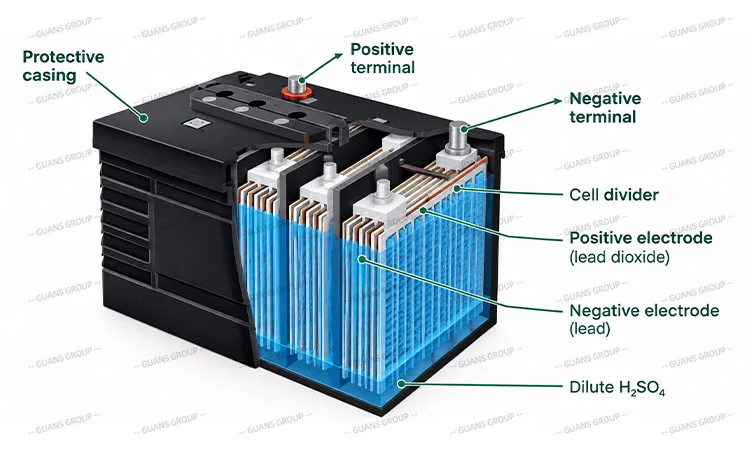
Lead Acid Battery Structure

A typical lead acid battery contains several materials that require different treatment methods during recycling.

Lead-acid battery structure diagram
Lead Grid

The metallic lead components can be separated during the mechanical recycling stage and sent to the smelting process.

Lead paste contains lead compounds and represents an important source of recoverable lead. It normally requires dedicated treatment before smelting.

Battery casings are commonly made from polypropylene. After separation and washing, the plastic can be processed for recycling.

The electrolyte must be collected and treated through an appropriate acid neutralization or wastewater treatment system.

Separator materials and fine residues are handled according to the plant’s process configuration and local environmental requirements.

Result: Crude lead, refined lead, lead alloys, PP plastic and other recovered materials.

Final Products

A complete lead acid battery recycling plant turn spent batteries into valuable resources, including metallic lead, lead paste, polypropylene plastic and sulfuric acid electrolyte.

refined lead

Refined Lead

High-purity lead obtained after refining, suitable for downstream use.
crude lead

Crude Lead

Impure lead from smelting, requiring further refining before use.
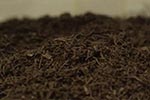
lead grid

Lead Grid

Metallic lead components recovered during mechanical separation.
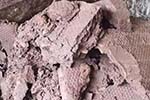
lead mud

Lead Slime

Lead-bearing residue from refining or washing, requiring further recovery or disposal.
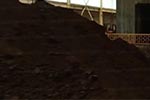
lead paste

Lead Paste

Lead-containing paste requiring dedicated treatment before or during the smelting route.
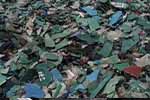
plastic

PP Plastic

PP battery casing separated for washing and further recycling.
Technical Parameters

Lead-acid battery recycling machines can be customized according to customer requirements regarding production capacity, voltage, and power.

Model ULAB-5 ULAB-10 ULAB-15
Capacity 5 tons/h 10 tons/h 15 tons/h
Motor Power 220 KW About 280 KW About 435 KW
Dimension (L×W×H) 30*8*8m 42*12*8m 45*12*8m
Advised Land Space 60*15m 100*15m 100*15m
Lead Recovery Rate ≥ 99% ≥ 99% ≥ 99%

Note: Actual capacity, recovery rate, equipment configuration and final product purity depend on battery composition, feedstock condition, plant design and local environmental requirements.

Lead Acid Battery Recycling Process

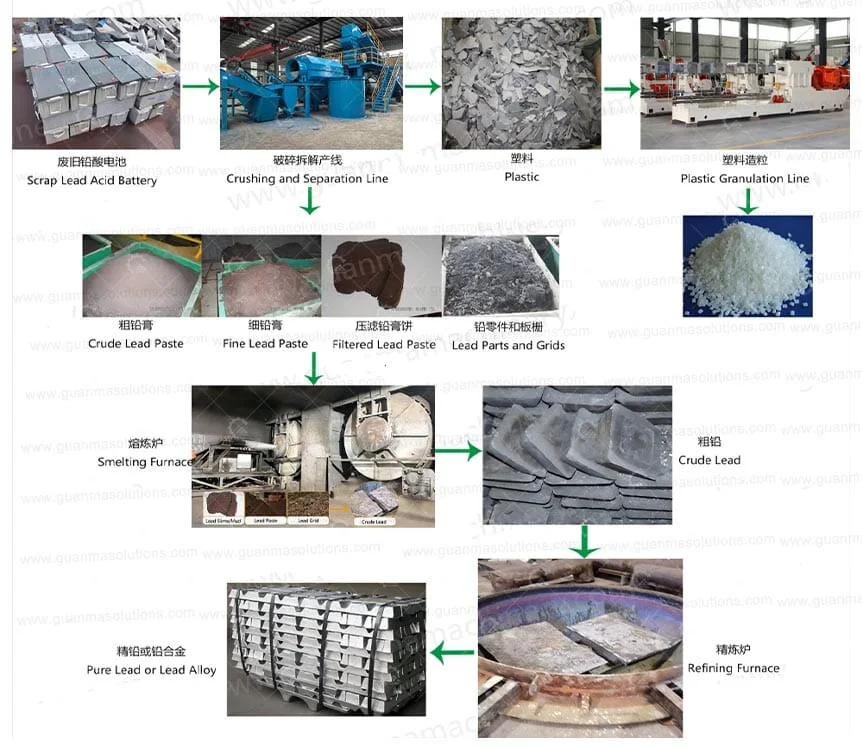
The complete lead acid battery recycling process combines mechanical separation, material treatment, thermal processing and refining technologies to recover valuable materials from spent batteries.

Spent Lead Acid Batteries → Battery Feeding & Acid Drainage(Acid → Collection → Neutralization / Treatment) → Battery Crushing / Breaking → Lead & Plastic Separation(PP Plastic → Washing → Drying → Plastic Recycling) → Lead Paste Separation → Paste Desulfurization → Lead Smelting → Crude Lead → Lead Refining(Furnace Gas → Dust Collection → Gas Treatment) → Lead Ingot Casting.

Complete Plant Solution: Battery Breaking → Separation → Smelting → Refining

Core Lead Acid Battery Recycling Equipment

GUANS GROUP Lead Acid Battery Recycling Plant designed to process spent lead acid batteries from initial feeding and battery breaking through material separation, lead paste treatment, smelting, refining and final ingot casting.

01 — Battery Feeding System

Provides controlled feeding of spent batteries into the recycling line.

02 — Battery Crusher / Breaker

Breaks and reduces whole batteries into processable material fractions.

03 — Lead Acid Separation System

Separates lead-bearing materials from plastic and other fractions.

04 — Lead Paste Separation System

Collects and concentrates lead paste for subsequent treatment.

05 — Paste Desulfurization System

Treats lead sulfate-containing paste before the smelting stage.

06 — Lead Smelting Furnace

Converts lead-bearing materials into crude lead.

07 — Lead Refining Furnace

Further removes impurities from crude lead.

08 — Lead Ingot Casting Machine

Casts refined lead into standardized ingots.

09 — Plastic Washing System

Cleans separated PP plastic and prepares it for downstream recycling.

10 — Dust Collection System

Captures dust generated during crushing, conveying and other processing stages.

11 — Flue Gas Treatment System

Treats furnace exhaust gases before discharge.

12 — Acid / Wastewater Treatment System

Handles acidic liquid streams generated during battery processing.

Lead Recycling Plant Configuration

GUANS GROUP can configure the project according to your required production capacity and investment plan.

A. Crushing & Separation Line

B. Battery Recycling + Smelting

C. Complete Lead Recycling Plant

Contact GUANS GROUP

Why Choose GUANS GROUP?

GUANS GROUP combines recycling equipment manufacturing, process engineering and turnkey project to help customers build reliable lead acid battery recycling operations.

🏭 Direct Manufacturer

Factory-direct equipment and engineering support without unnecessary intermediaries.

⚙️ Custom Engineering

Understand battery types and feedstock characteristics. Develop the appropriate lead acid battery recycling process.

🌍 Global Installation Training

Provide installation guidance, equipment testing and production commissioning and operation and maintenance training.

🔬 Professional R&D Team

Dedicated research teams continuously improve recovery rates and maximize material separation efficiency.

♻️ Complete Process

From battery breaking and separation to lead smelting, refining and casting,

📋 Plant Layout

Plant configuration based on capacity, feedstock, final products and local conditions.

Build Your Lead Acid Battery Recycling Plant

Tell us what you have — used batteries, target capacity and desired final products — and our engineering team will recommend a suitable recycling process and equipment configuration.

Frequently Asked Questions

What is a lead acid battery recycling plant?

A lead acid battery recycling plant is an integrated facility designed to process spent lead acid batteries and recover valuable materials such as lead, lead paste and polypropylene plastic through crushing, separation, treatment, smelting and refining processes.

The main recoverable materials include lead grids, lead paste, polypropylene plastic and sulfuric acid electrolyte. The exact recovery configuration depends on the plant design and feedstock.

A complete plant may include battery breakers, crushers, separation systems, lead paste treatment equipment, desulfurization systems, smelting furnaces, refining furnaces, ingot casting machines, plastic washing equipment and environmental protection systems.

The general process includes battery feeding, acid collection, crushing and breaking, lead-plastic separation, lead paste treatment, smelting, refining and ingot casting. Plastic and liquid streams are processed separately.

The general process includes battery feeding, acid collection, crushing and breaking, lead-plastic separation, lead paste treatment, smelting, refining and ingot casting. Plastic and liquid streams are processed separately.

Yes. The plant can be designed to process spent automotive lead acid batteries as well as industrial, UPS, telecom and stationary batteries.

Depending on the plant configuration, final products can include refined lead ingots, lead alloys, recycled PP plastic and treated liquid streams.

Online Chat +86*********** ********@gmail.com